
Rain Bird · Hose Faucet Timers
Rain Bird 1ZEHTMRS Simple-Set hose-end timer
Our take
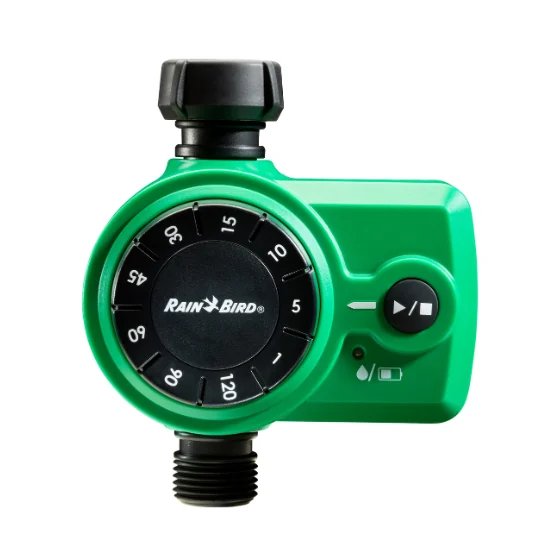
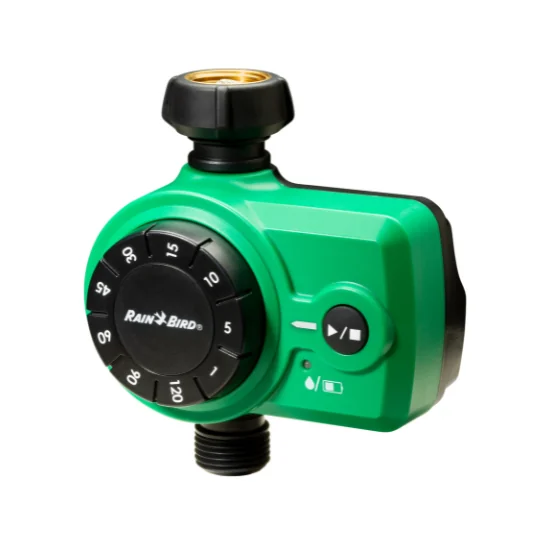
The Rain Bird 1ZEHTMRS suits someone who wants a sprinkler to stop after a chosen session without programming a calendar. Turn the dial for 1–120 minutes, then press the button to start. This is a manually started countdown timer, not a recurring daily scheduler. The US model has a brass female garden-hose-thread inlet and a plastic male outlet, with power supplied by two separately purchased AA alkaline batteries. Choose it for straightforward timed watering within its operating limits. A programmable hose timer is the better choice when watering must begin while nobody is home.
In this review
- Control format
- Dial and start/stop button
- Session duration
- 1–120 minutes
- Number of stations
- One
- Power
- Two AA alkaline batteries, separate
A good fit for
A gardener starting a watering session by hand and wanting automatic shutoff after a selected duration.
Reasons to keep looking
Recurring unattended schedules, a battery-free timer, or low-flow drip use below the published operating range.
Specifications
- Control format
- Dial and start/stop button
A session begins when you press start.
- Session duration
- 1–120 minutes
Automatic stop is separate from a daily start schedule.
- Number of stations
- One
One connected watering route.
- Power
- Two AA alkaline batteries, separate
This dial timer is electronic, not battery-free.
- US inlet/outlet
- Female brass GHT inlet; plastic male GHT outlet
Do not substitute the BSP version.
- Pressure range
- 15–110 PSI
The supply must remain within the stated limits.
- Stated flow range
- 5–14.6 GPM
Very low-flow drip branches are not an assumed match.
- Temperature
- 32–110°F; protect from freezing
Outdoor cold-water use only.
What’s included
- Selected device. One US 1ZEHTMRS hose-end timer; batteries purchased separately
Related equipment and guides
Compare the formats and model choices in watering timers & controllers.
A shutoff timer rather than a calendar
The Simple-Set control sequence is deliberately short: set a duration and press the button to begin. When the interval finishes, the timer stops the session. That works for an owner who is present to place a sprinkler and start watering, but does not want to remember to close the faucet later. It does not replace a programmable controller that stores start times and repeat intervals. The similar naming of hose-end timers can obscure this distinction, so choose the operating routine before comparing displays or buttons.
The dial still needs batteries
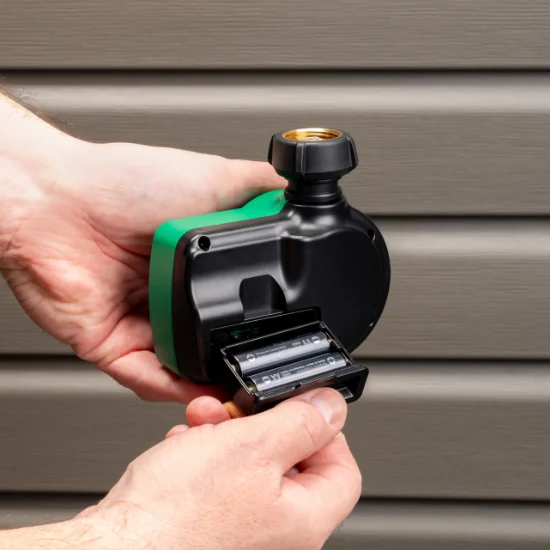
Despite the large rotary control, the 1ZEHTMRS uses two AA alkaline batteries. They are not included. The LED provides battery and watering-status indications without a full scheduling screen. Keep that battery requirement in the comparison with a mechanical countdown timer such as Orbit 62034. Both can serve a manually started watering session, but they reach that result with different power arrangements. A dial on the front does not establish a mechanical valve or remove the need for battery maintenance.
Use the US hose-thread configuration
The selected US 1ZEHTMRS has a brass female garden-hose-thread swivel inlet and a plastic male garden-hose-thread outlet. Rain Bird also identifies a separate BSP version. The general appearance and model family are not enough to make those threaded connections interchangeable. Match the complete suffix when comparing an imported listing. Leave room below the faucet for the timer body and hose bend, and avoid using the assembly as a support for a hose pulled taut around a corner.
The flow range affects small drip projects
Rain Bird publishes a flow range of 5–14.6 gallons per minute and a pressure range of 15–110 PSI. A small collection of low-flow pot drippers can fall well below that minimum, even if the connections physically fit. Do not choose this device for such a branch merely because it is sold among hose-watering products. A timer specifically suited to the drip system is a better starting point. Count total emitter demand and the supply requirements before combining a timer, regulator and many small drippers.
Choose the session for the installed sprinkler
A duration in minutes is not a direct measure of water reaching the soil. The sprinkler pattern, available supply and planted area determine what a session delivers. Start with an appropriate watering plan, position the sprinkler and use the timer to end that chosen session. The one-station format cannot give two connected branches different durations by itself. For separate containers and lawn areas, independent outlets or a different watering arrangement may be more useful than splitting this single timed output.
Care, storage & ownership
Remove before freezing
Use the timer outdoors with cold water within its stated temperature range. Remove and drain it before freezing conditions, and service the batteries as directed by Rain Bird.
Model comparison
Scroll across to compare the documented details.
| Model | Rain Bird 1ZEHTMRS Simple-Set hose-end timer | Orbit 62034 mechanical hose timer | Orbit 62061 single-outlet digital hose timer |
|---|---|---|---|
| Documented details |
|
|
|
| Reason to consider it | A gardener starting a watering session by hand and wanting automatic shutoff after a selected duration. | Orbit 62034 provides a mechanical countdown format when a battery-free manual start is preferable. | Orbit 62061 stores watering schedules when unattended starts are required. |
Common questions
Will it start watering every morning?
No recurring start schedule is described for this Simple-Set model. Set the duration and press the button for each session.
Does it need batteries?
Yes. It uses two AA alkaline batteries, purchased separately.
Can it stop before the dial time ends?
The button starts or stops the watering cycle.
Can I assume it suits a few pot drippers?
No. Rain Bird publishes a five-GPM minimum flow, so low-flow drip compatibility must not be assumed.
Model details, manuals & sources
- Full model
- Rain Bird 1ZEHTMRS Simple-Set hose-end timer
- Amazon ASIN
- B0G5SGRZXK
Updated 2026-11-25.
Similar products
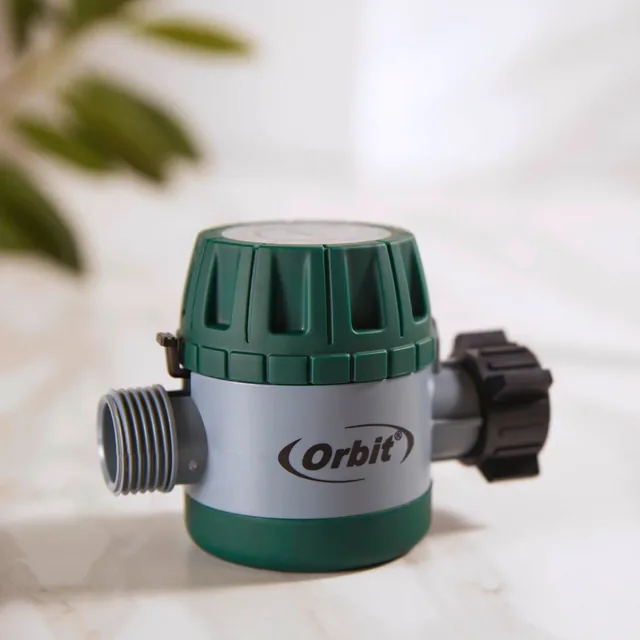
Orbit 62034 mechanical hose timer
Orbit 62034 provides a mechanical countdown format when a battery-free manual start is preferable.
Explore this alternative
Orbit 62061 single-outlet digital hose timer
Orbit 62061 stores watering schedules when unattended starts are required.
Explore this alternative