Measure the route to the plant at the back
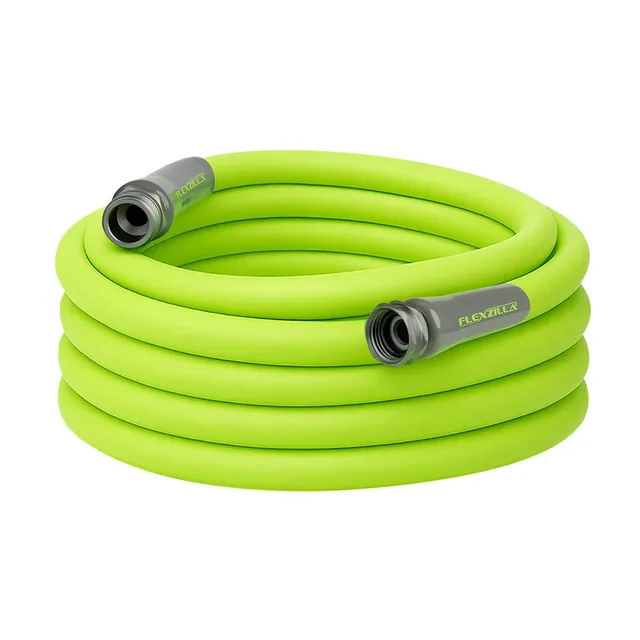
There is a very familiar watering problem: most of the garden is reached comfortably, but the hose stops short of the last bed. Measure the route it needs to travel, including the outside of beds, corners, and places you want to keep clear. That gives you a much better length comparison than a straight line across the lawn. The 50-foot and 100-foot Flexzilla hoses here illustrate a useful choice. The longer hose reaches farther, while both still need a workable storage and handling plan for the short trips. Picture where the hose will sit when only the patio pots need attention, and where it will go at the end of the session.
Treat the tap, hose, nozzle, and reel as one setup
Connection standards, inside diameter, operating requirements, and reel capacity belong in the same picture. A reel may name capacity for a particular hose size or type, so read the conditions before planning to reuse an existing hose. An expandable hose brings its own length, draining, and storage guidance. For a watering wand or nozzle, look at the controls, reach, and the task you want to do. A comfortable arrangement for a few containers may differ from the one you would choose for cleaning. I would rather have a clearly matched set of parts than a collection of nearly compatible fittings waiting beside the tap.
Choose sprinklers from the area they need to cover
Measure the lawn and mark the beds, paths, and other edges around it. Compare the exact sprinkler's documented pattern and adjustment with that shape. Read the supply conditions attached to any coverage claim, along with the placement and operating guidance. Oscillating and impact sprinklers offer different arrangements to investigate; the right question is how the documented setup fits the area you intend to water. Keep the initial setup visible while establishing where the water lands. The schedule should follow the plants, soil, weather, and applicable local rules, rather than staying fixed simply because the timer has remembered it.
Draw a drip layout before counting the pieces
For pots, hanging baskets, or a planted bed, a simple sketch helps a drip-kit description make sense. Mark every watering point and the tubing route. Then compare tubing, fittings, emitters, and all required supply-side parts with that drawing. Rain Bird's DRIPKITBAG is documented as a repair-and-expansion kit, with tubing, emitters, and fittings. That is a useful role, but different from assuming a bag starts every new installation. Read the exact pressure, filtration, connection, and backflow requirements in the instructions. Count the components you need after the layout and supply are clear. Piece count by itself says very little about whether the garden is covered.
Buy the timer for the adjustments you will make
A timer is most appealing when its controls fit the way you tend the garden. Write down the schedule choices, outlets, manual watering, and delay functions you expect to use. Read those steps in the instructions before buying, including how the device is powered and cared for between seasons. Place access to the controls in the plan as well. A clever schedule is less useful if making a simple change is a chore. Once the whole arrangement is chosen, match the exact product packages on Amazon and make a final list of the fittings or other required parts that are supplied separately.
Common buying questions
Would you always buy the longest hose?
I would measure the full route first and consider the shorter daily jobs and storage. The extra reach is useful when there is a clear need and a sensible place for the length to go.
How do I tell whether a drip kit is for a new system?
Read its stated purpose, exact contents, and installation instructions. Repair and expansion packages can leave supply-side components to an existing arrangement or a separate purchase.
Does a watering timer choose the right schedule for me?
Read the model's features and instructions, then set and adjust the schedule around the plants, site conditions, and applicable local watering rules.
Put the plan to work in your garden
Put the useful measurements beside the features you want, then save a few models to compare. Choose the setup that fits the whole job, from bringing the tool out to putting it away.
Explore the tool shed to put your shortlist together.