Separate the three systems before starting
A garden hose, the plumbing supplying its faucet and a buried irrigation network can share water without sharing a winterization procedure. List what is connected: hose, nozzle, timer, reel leader hose, filter, pressure regulator, drip tubing and any dedicated sprinkler supply. Removing the visible hose does not empty every other component.
Work before a freeze, while hoses are flexible and fittings can be handled normally. A watering system used all winter in a mild area still needs a response to forecast freezing conditions. Where prolonged ground freezing is normal, complete seasonal shutdown before access and drainage become difficult. There is no single nationwide shutdown date.
Disconnect and drain portable equipment
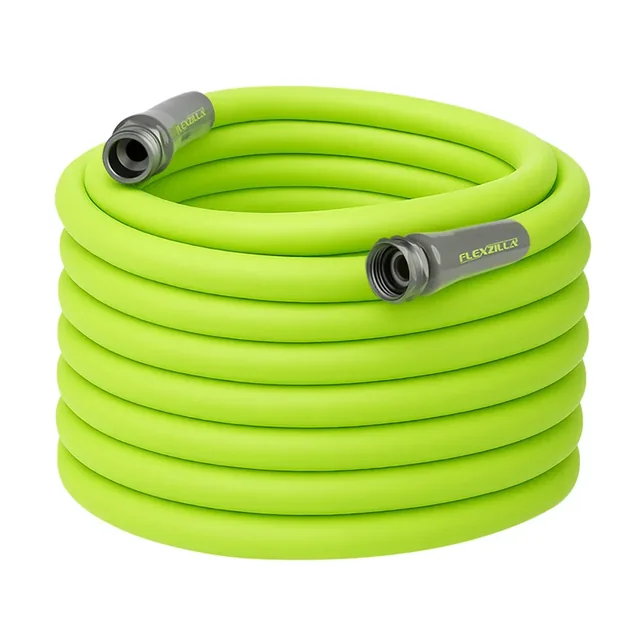
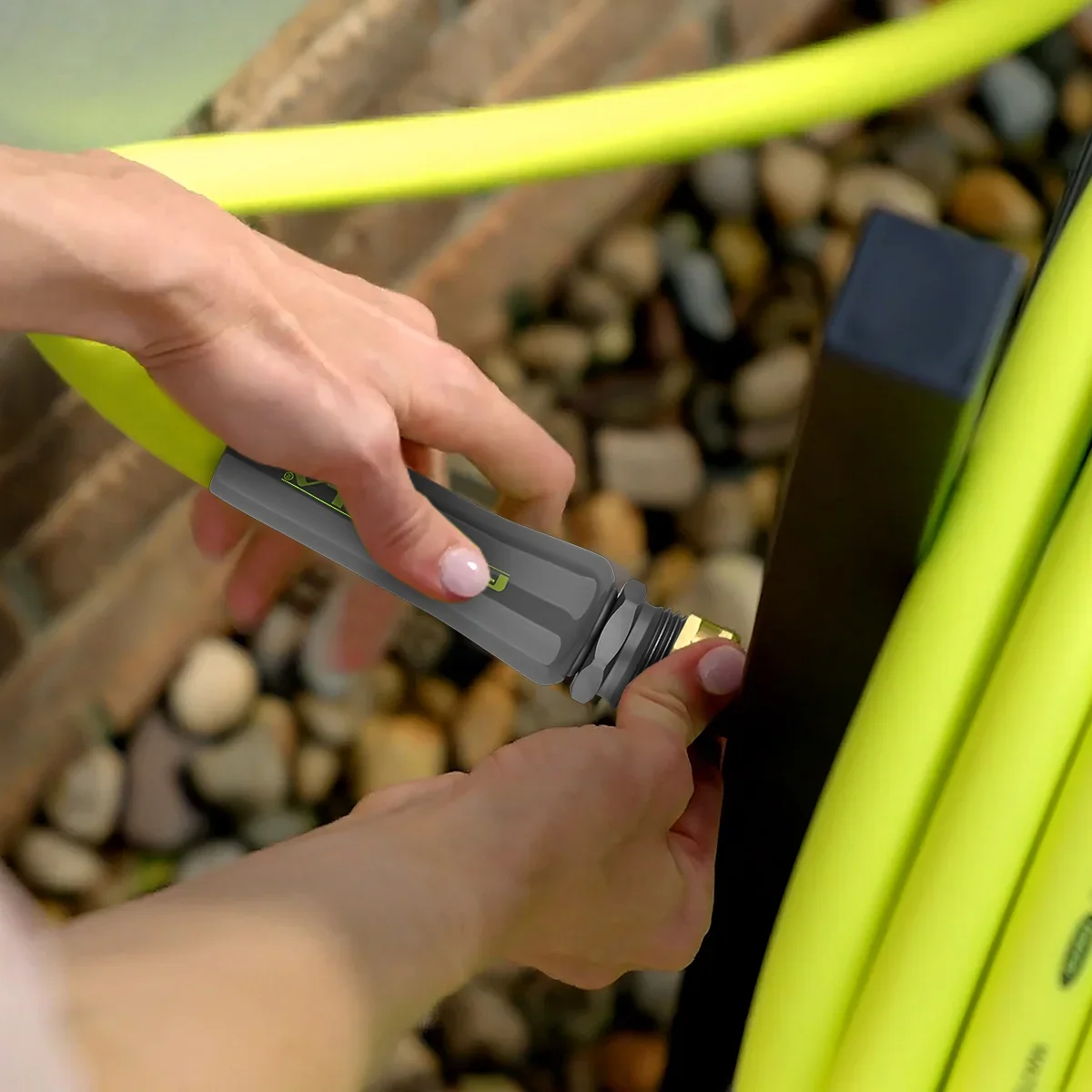
Turn the faucet off and release trapped hose pressure through the nozzle. Remove the nozzle and other detachable attachments, disconnect the hose from the faucet, and let water run out by lifting successive sections toward an open end. Do not leave a closed nozzle trapping water inside a coil.
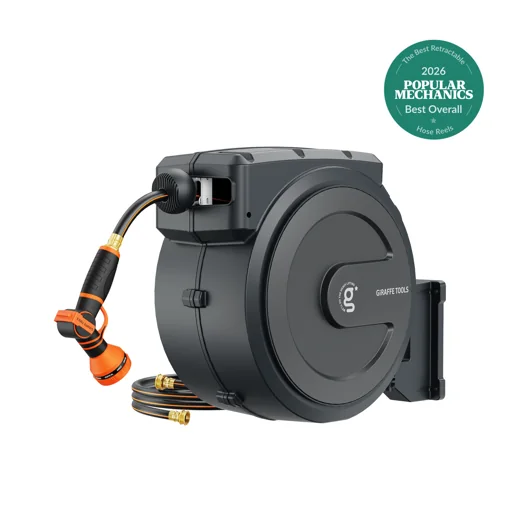
Drain detachable sprinklers and nozzles too. For a reel, distinguish the main hose from its short supply connection; leaving the leader attached can leave water at the faucet. Use the reel’s own drainage and storage instructions, especially for an enclosed retractable unit. Do not dismantle a sealed rewind mechanism simply because a loose hose can be uncoiled.
Store hoses and faucet timers appropriately
Coil a drained conventional hose without sharp kinks in a sheltered place. A fully drained hose can sometimes remain outside, but construction, reel design and the manufacturer’s storage limits matter. Do not force a frozen hose into a tighter coil. Keep small washers and fittings together so a missing seal does not become a spring leak.
Remove a hose-mounted timer that must be protected from freezing, drain it and follow its battery-storage directions. Orbit’s hose-faucet guidance calls for removing its timers and attachments to a warm, dry location and removing timer batteries. A fixed indoor or outdoor irrigation controller is different equipment; do not apply a portable timer’s storage procedure to it.
Protect the faucet and its supply
Disconnect hoses even from a frost-free faucet. Leaving a hose attached can trap water and defeat the drainage the faucet depends on. A foam cover does not remove trapped water, and the frost-free label does not make the installation immune to freezing.
Where the outdoor branch has a dedicated interior shutoff and drain arrangement, use the procedure for that installation to isolate and empty it. The right valve and drain location depend on the plumbing. If there is no known isolation arrangement, or water continues leaking after shutdown, a plumber can identify and correct it. Do not substitute an irrigation controller setting for shutting off the physical water supply.
Drain garden drip and soaker arrangements
A removable soaker hose or small drip layout may be easiest to lift, drain and store. For a layout staying in place, use its designated low-point drains and removable end closures as the manufacturer directs. Low loops and rigid fittings can retain water even when the nearest open tube appears empty.
Drain and protect the filter, regulator, valves and backflow components as separate parts of the arrangement. Keep track of end closures and fitting positions for reassembly. A dripline procedure is specific to its components and pressure limits; a blowout instruction for lawn rotors is not automatically suitable for small drip fittings or emitters.
Use a system-specific sprinkler winterization procedure
For buried sprinklers, the appropriate method can be manual drainage, automatic drains or a compressed-air blowout. It depends on how the network was designed and installed. The system needs its water supply isolated, water removed from vulnerable components and exposed valves or backflow assemblies protected. Keep backflow vents and drain outlets unobstructed when insulating.
Compressed air can damage components and cause injury. A compressor’s maximum pressure is not a suitable operating setting, and pressure alone does not establish adequate air volume. Do not improvise a universal pressure or connect through an arbitrary backflow fitting. An irrigation contractor should use the designated connection and the instructions for the pipes, valves, heads and backflow device.
Set the controller and keep winter watering separate
After drainage, place the controller in its specified winter, off or suspension mode so it cannot refill the network. Controller memory, backup batteries and power requirements vary. A system that operates a pump also needs the correct pump shutdown procedure; avoid changing wiring without the appropriate instructions and competence.
In dry Colorado conditions, a lawn or newly planted landscape may still need occasional winter water while the buried system remains winterized. Use a suitable temporary hose route only when the ground can absorb water and temperatures allow, then drain and disconnect it again. In a mild wet winter, rainfall may remove the need for irrigation. Neither case justifies leaving the old summer schedule unchanged.
Match winter watering to your regional conditions · Find the other fall and winter yard tasks
Common questions
Is switching the sprinkler controller off enough?
No. It stops scheduled signals but does not remove water already in pipes, valves, heads or exposed backflow equipment. Winterization must address the physical water supply and drainage as well as the controller.
Can I leave a hose attached to a frost-free faucet?
Disconnect it for freezing weather. An attached hose can retain water and prevent the faucet from draining as intended. The faucet and supply plumbing also need protection appropriate to their installation.
Can a small shop compressor winterize any sprinkler system?
No. Adequate air volume, controlled pressure, the correct connection and component-specific limits all matter. A high-pressure surge is not a substitute for suitable equipment. Use an irrigation professional when the system procedure or equipment is uncertain.
Can I water after the sprinkler system is winterized?
A separate temporary hose can be used when winter watering is appropriate and its faucet can be safely operated. Leave the buried system shut down, and drain and disconnect the temporary hose again before freezing conditions.
Manuals & sources
Updated 2026-11-25.
- Illinois Extension: Winterize outdoor plumbing, irrigation, hoses and spigots
- OSU Extension: Can I leave my garden hoses outside this winter?
- Orbit: Prepare a hose faucet timer for winter
- Iowa State Extension: Using Drip Irrigation in the Garden
- Rain Bird: How do I winterize my irrigation system?
- Rain Bird: Fall is Blow-Out Season
- Rain Bird: How to winterize an irrigation controller
- CSU Extension: Fall and Winter Watering of Plants and Trees