Check your local seeding window
Start with the dominant grass and your local Extension guidance. University of Minnesota Extension uses soil below 40°F for its dormant-seeding method. Iowa State describes a window with daytime highs in the mid-30s to 40s°F while the soil is still workable enough to incorporate seed lightly. The two recommendations use different measurements and soil conditions. Follow the method for your area.
Maryland Extension usually advises against dormant seeding for tall fescue and points to March or early April if you need a spring repair. Even where dormant seeding is an option, a warm spell can start germination before a freeze. Check the near-term weather and ground in the patch itself, especially against a sunny wall or where snowmelt collects.
| Location and grass | Decision |
|---|---|
| Minnesota cool-season lawn | Use the Minnesota method when soil is below 40°F and seed can reach the soil. |
| Iowa cool-season lawn | Look for sustained cold with soil still workable enough for light incorporation. |
| Maryland tall fescue | Plan a suitable spring repair or the preferred fall window. Maryland Extension reports poor results from dormant seeding. |
Prepare thin turf and bare soil separately
Walk the area before you buy seed. On thin turf, lift matted leaves that block seed from reaching the ground. On bare soil, mark slopes and runoff routes. A bare strip beneath a downspout that washes out after every storm needs the water redirected before a repeat seeding.
Where dormant seeding is locally suitable, consider a germination or erosion-control blanket over exposed bare ground, especially on a slope. In a Minnesota field demonstration, bare soil without a blanket dried during a warm, windy spell after snowmelt and had fewer visible seedlings. Check the blanket instructions and use the preparation method recommended for your soil conditions.
Measure and split the seed
Measure thin turf and bare soil separately and confirm the recommended rate for each. For example, if the recommended rate for a 600-square-foot thin patch is 4 pounds per 1,000 square feet, the total is 2.4 pounds. Weigh out 1.2 pounds for each of two perpendicular passes. Recalculate if the bag or your local recommendation calls for a different application rate.
Spread on a dry day when you can see the target surface. For a small patch, distribute the measured seed by hand. On a larger patch, follow the spreader’s calibration instructions before starting. Turn the spreader off before crossing a sidewalk or moving between patches.
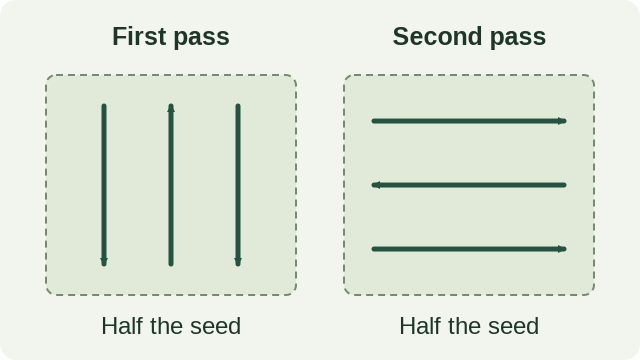
Calculate seed quantities from the exact bag and application
Plan for spring emergence
Check the seeded areas as the snow clears and the soil warms. Irrigation may still be shut off when seedlings appear. Arrange access to a hose or another permitted water source so you can keep the surface moist during dry weather without creating puddles or runoff.
Set the crabgrass plan before treating the lawn. Many preemergent products can interfere with new turfgrass. Check the exact label for the grass species, reseeding interval and any restrictions on use around seedlings. If the treatment conflicts with seeding, keep it off the seeded area and plan to manage weeds there separately.
Inspect thin areas after the grasses in the mix have had time to emerge. If seed washed into a low spot or the same patch stayed waterlogged, fix the runoff or drainage problem before topping up. Where soil fertility or pH is in doubt, use a lab soil test to guide amendments.
Common questions
Can I spread seed over snow?
Wait until you can see the target patch and give the seed a path to the soil. Snow can hide debris, pooled water and the edges you measured.
Should I rake in dormant seed?
Use the preparation method recommended locally. Minnesota’s method relies on seed reaching the surface and on freeze-thaw cycles. Iowa State describes light incorporation into workable soil.
Manuals & sources
Updated 2026-11-27.