Follow the scraps through the whole route
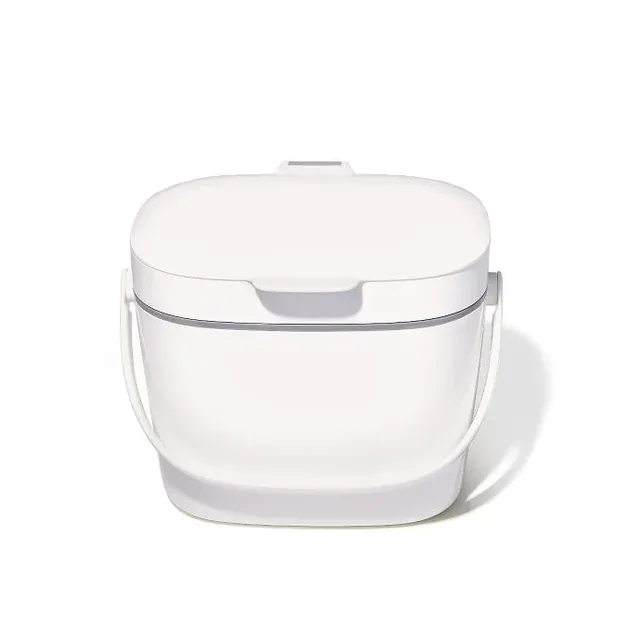
A countertop caddy makes collection and carrying easier; it is not a processing system simply because its name includes compost. OXO’s selected 1.75-gallon bin has a stay-open lid and fold-down handle. Its useful comparison with the smaller 0.75-gallon version is collection volume and the room available near food preparation.
Decide where the contents go next. An existing garden heap and a municipal organics service can accept different materials and liners. The collection container cannot determine those acceptance rules. Match the liner and contents to the receiving system rather than assuming a bag sold for composting belongs in every destination.
Keep a finishing batch separate from fresh additions
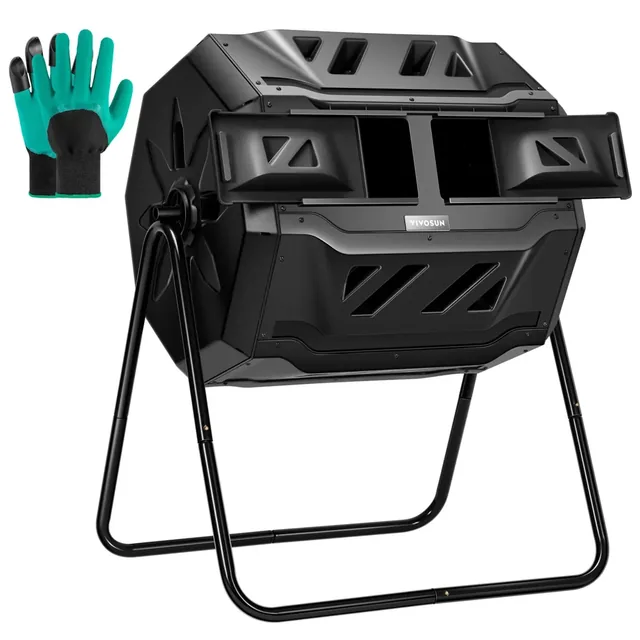
VIVOSUN’s 43-gallon tumbler divides its drum into two chambers, allowing one side to hold an older batch while new material enters the other. The stated total is not 43 gallons of finishing space plus another 43 gallons of fresh-input space. The divided layout changes how much can be kept at each stage.
Plan access for opening the doors, adding material and removing the finished contents. A rated gallon figure alone does not establish that a cart or bucket fits below an opening. Obtain the assembled footprint and opening clearance for the selected unit before planning a tight installation.
Treat vermicomposting as a living system
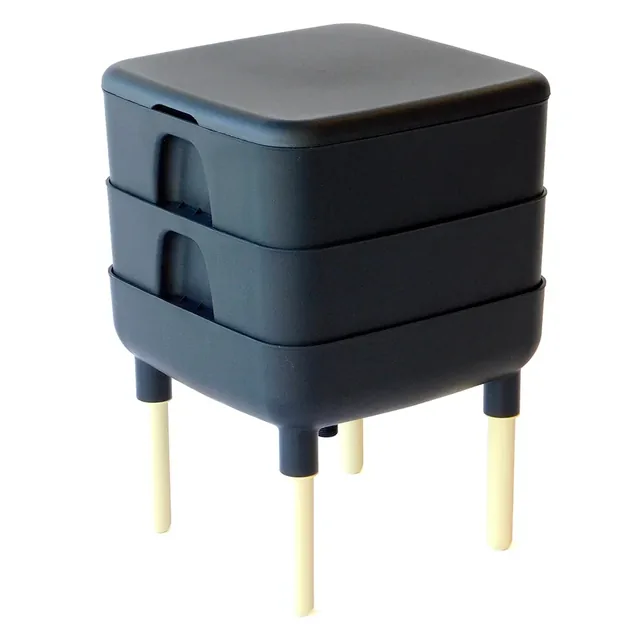
FCMP’s selected Essential Living Composter has two trays, with a maker-stated four US gallons per tray. The nominal tray sum is eight gallons, but that does not mean eight gallons of fresh kitchen scraps should be loaded at once. Bedding, worms, moisture and the processing pace determine the working arrangement.
Worms are not included. The trays use migration openings and a water-retention channel, which are design features rather than a guarantee of odor-free operation. Choose this system for the continuing worm-care routine, not simply because its 15-by-15-inch footprint occupies less floor area than a large outdoor bin.
Compare the work at emptying time
A kitchen bin needs frequent carrying and cleaning. OXO specifies that the main body is dishwasher safe while the remaining parts are hand washed. A tumbler needs space to rotate and remove a batch. A tray system needs access for managing bedding, worms and processed material.
These ownership tasks make a more useful comparison than treating every gallon as equivalent. Keep the chosen system’s material and maintenance instructions with it. A container’s design or a manufacturer’s short processing claim does not establish when a particular batch is finished.
Common buying questions
Is a kitchen compost bin enough to make finished compost?
A collection caddy stores scraps for transfer. It should not be treated as equivalent to an outdoor processing system or managed worm bin.
Does a two-chamber 43-gallon tumbler hold 43 gallons in each chamber?
No. The 43-gallon figure is the stated total. Splitting the drum separates stages while sharing that total space.