Walk the route before shopping
The lawn looks different when you picture moving a mower through it. There may be a broad front section, a narrow strip beside the house, a gate, and a few trees that turn the job into several little routes. Make a quick sketch and measure the narrowest passage. Include the place where the mower will be stored, along with room to get it back out. Deck width is useful for comparing the path cut in one pass, but the whole machine needs to fit the gate. If the route is full of close turns, I would give that fit more attention than a small increase in cutting width. A larger open area can put the balance of the decision in a different place.
Choose how you want to move through the job
A push mower keeps the choice straightforward if you are comfortable providing the forward movement. Self-propelled drive adds assistance, which makes the speed control and turning arrangements worth reading about. A lawn tractor or zero-turn mower brings seated operation, delivery, storage, and service into a bigger purchase. Compare the controls and the route you will drive, including the surroundings of beds and trees. A robotic mower begins with another kind of plan: separate lawn sections, connections, borders, navigation requirements, and a charging position. Every format has model-specific terrain instructions. Read those before deciding whether the machine suits slopes or other demanding parts of the site.
Put the battery, cord, or engine in the picture
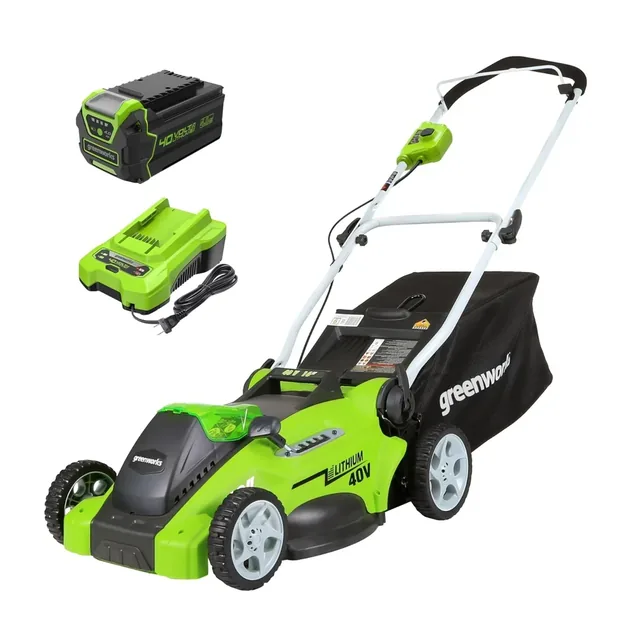
For a battery mower, put the included batteries and charger beside the mower in your comparison. A bare-tool offer and a complete kit can look remarkably similar in a search result. Existing tools may make one platform appealing, but confirm the documented compatibility rather than relying on a voltage number. With a corded mower, trace a suitable cable route all the way to the farthest grass. Trees and beds deserve a place in that plan. For a gas mower, leave room for the fuel, maintenance, storage, and service routine the model requires. The best arrangement is the one you can carry through the season comfortably.
Decide what you want to do with clippings
Clipping options are easy to skim past until the first mowing day. If you expect to collect, picture where you will stop, remove the bag, and empty it. If mulching or side discharge is part of the plan, confirm that the chosen model supports it and that the necessary pieces are included. The EGO LM2135SP and CRAFTSMAN CMEMW213 are examples here with three documented clipping modes, though their power and drive arrangements differ. A feature earns its place when it fits your lawn-care plan. Give height adjustment the same attention, including the documented range and the way it is changed.
Compare a complete package, then sleep on the measurements
A shortlist of two or three well-matched machines is easier to judge than a page of unrelated specifications. Put format, deck width, drive, clipping choices, batteries or other power requirements, and storage beside one another. Add delivery, assembly, service, and approved accessories where relevant. Then take the measurements back outside. A mower that looked ideal on a screen can lose its appeal beside a tight shed door. Before ordering, match the full model and included-item list on Amazon with the manufacturer's information. That final look is especially valuable when several bundles share a similar name.
Common buying questions
Is there a simple lawn-size cutoff for buying a riding mower?
The mowing route, access, storage, terrain guidance, and the way you want to do the job all belong in the decision. A single area number cannot settle those details.
Would you choose the widest deck that fits the budget?
I would first check gates, turns, the storage opening, and the complete machine width. Extra cutting width is attractive when there is room to use it throughout the route.
How can I compare battery runtime claims?
Read the battery configuration and the conditions attached to the claim. Grass, terrain, settings, and drive use can change the work involved, so keep the complete kit in view.
Put the plan to work in your garden
Put the useful measurements beside the features you want, then save a few models to compare. Choose the setup that fits the whole job, from bringing the tool out to putting it away.
Explore the tool shed to put your shortlist together.